
Why Website Speed Matters More Than Most Businesses Think
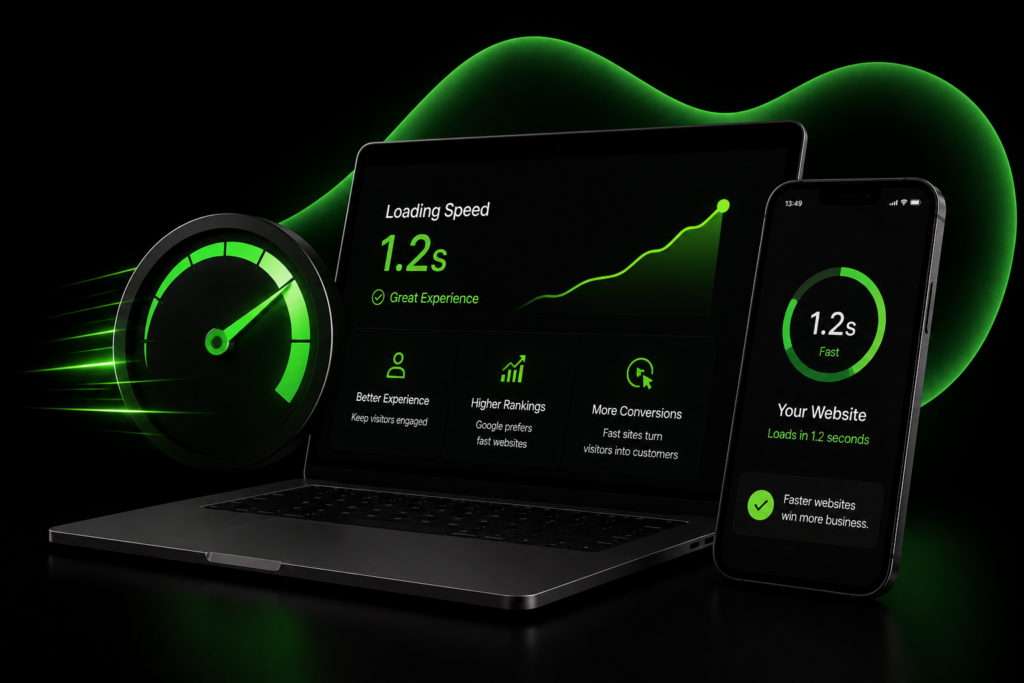
One of the biggest mistakes we see with small business websites is poor performance.
Many businesses focus heavily on design but completely ignore how fast the website actually feels for visitors.
The reality is that modern users expect websites to load almost instantly.
If a website feels slow, confusing, or laggy, most people leave before even reading the content.
That means website speed directly affects:
- Customer trust
- SEO rankings
- Lead generation
- Conversions
- Bounce rate
After years working in Custom Website Development, one thing we constantly noticed is that faster websites almost always perform better long term.
Visitors Judge Websites Extremely Fast
Most visitors form an opinion about a website within seconds.
If pages take too long to load, people immediately assume the business feels outdated or unprofessional.
This is especially true for local businesses because customers are often comparing multiple competitors very quickly.
A slow website creates friction before trust is even built.
Website Speed Directly Impacts SEO
Google now pays much closer attention to user experience when ranking websites.
That means SEO is no longer just about keywords or backlinks. The overall quality of the website itself plays a huge role in how well a business performs on Google.
Things like page speed, mobile responsiveness, visitor engagement, website structure, and overall usability all help Google understand whether users are having a good experience on the site.
For example, if visitors land on a website and quickly leave because pages load slowly or the experience feels frustrating, Google notices those behaviors over time. On the other hand, websites that feel fast, smooth, and easy to use usually keep visitors engaged longer, which sends stronger quality signals to search engines.
That is why modern SEO and website development work so closely together today.
That is why speed optimization is a huge part of our SEO services and website strategy process.
As we explained in our article about how good website design helps SEO, modern SEO depends heavily on the quality of the website itself.
Most Slow Websites Have The Same Problems
Many business websites become slow because they are overloaded with unnecessary tools and poorly optimized systems. Some of the most common problems we see are:
- Too many plugins
- Bloated WordPress themes
- Poor quality hosting
- Large unoptimized images
- Bad mobile optimization
- Outdated website builders
One thing we constantly noticed while rebuilding older websites is that businesses often do not realize how much these issues affect conversions.
Sometimes improving speed alone dramatically improves lead generation.
Fast Websites Feel More Trustworthy
When a website feels smooth, responsive, and fast, visitors naturally see the business as more modern, professional, and trustworthy. Small details heavily influence first impressions online, even if people do not consciously notice them.
On the other hand, slow or laggy websites immediately create friction. Visitors often associate poor performance with outdated businesses, lower quality service, or lack of professionalism.
That is why website speed is not just a technical improvement anymore. It directly affects trust, user experience, and ultimately whether visitors decide to contact the business or leave.
That is why we focus heavily on both design quality and performance during our website development process.
Mobile Speed Matters Even More
Most visitors now browse directly from their phones.
That means websites need to feel smooth on mobile devices first.
Unfortunately, many websites that feel “fine” on desktop perform terribly on mobile.
Google also uses mobile experience as a ranking factor, which makes mobile optimization even more important.
That is why every website we build is designed to feel responsive and fast across all screen sizes.
Our Website Support and Management services also help businesses continue improving website performance over time.
Frequently Asked Questions
Does website speed affect SEO?
Yes. Website speed directly affects user experience, bounce rate, and overall SEO performance.
Why do slow websites lose customers?
Most visitors expect websites to load quickly. Slow websites create frustration and reduce trust immediately.
Can website speed improve conversions?
Absolutely. Faster websites usually create smoother experiences that help visitors stay longer and take action more easily.
What makes websites slow?
Common causes include bloated themes, too many plugins, bad hosting, large images, and poor optimization.
Is mobile website speed important?
Very important. Most traffic now comes from mobile devices, and Google heavily prioritizes mobile performance.
Final Thoughts
Website speed plays a much bigger role than most businesses realize.
A fast website improves trust, SEO, user experience, and conversions all at the same time.
That is why modern websites should be built with performance in mind from the very beginning instead of trying to fix problems later.
At Sitemaestros, we focus heavily on building fast, modern websites designed for long term growth.
If you want a website built for both performance and conversions, explore our Custom Website Development, SEO services, and Website Support and Management.